Entanglements between Evangelicals & Gangs

Guest Blog by Stephen Offutt, Asbury Theological Seminary

I conduct research in El Salvador. I began a decade long research initiative in 2013 called the
Religion, Poverty & Development (RPD) project. The first wave of results showed that the most acutely experienced aspect of poverty in lower class Salvadoran communities is violence, and that evangelical churches have a close and complicated relationship with gangs.
I’m delighted to be able to share my findings on Bob’s blog. If you are reading this, you likely
know that Bob’s pathbreaking book, Homies and Hermanos: God and Gangs in Central America (Oxford University Press 2011), explained that gang members are uniquely allowed to leave the gang if they have an authentic conversion to evangelical Christianity – otherwise they are tied to the gang for life. I saw this dynamic at work in my own research; it spoke to the tremendously important role pastors and churches play in impoverished Central American communities.
My book looks at other interactions between evangelicals and gangs. The two groups inhabit
the same marketplaces, schools, buses, parks, and even families, making relationships between them unavoidable. How such relationships function can be surprising. In one example from my research, an evangelical woman (we will call her Maria) had uncles who were in the gang. They got angry with her and threatened her, her children, and her pastor with violence. This is not abnormal: gangs often victimize evangelicals (see photo 1).
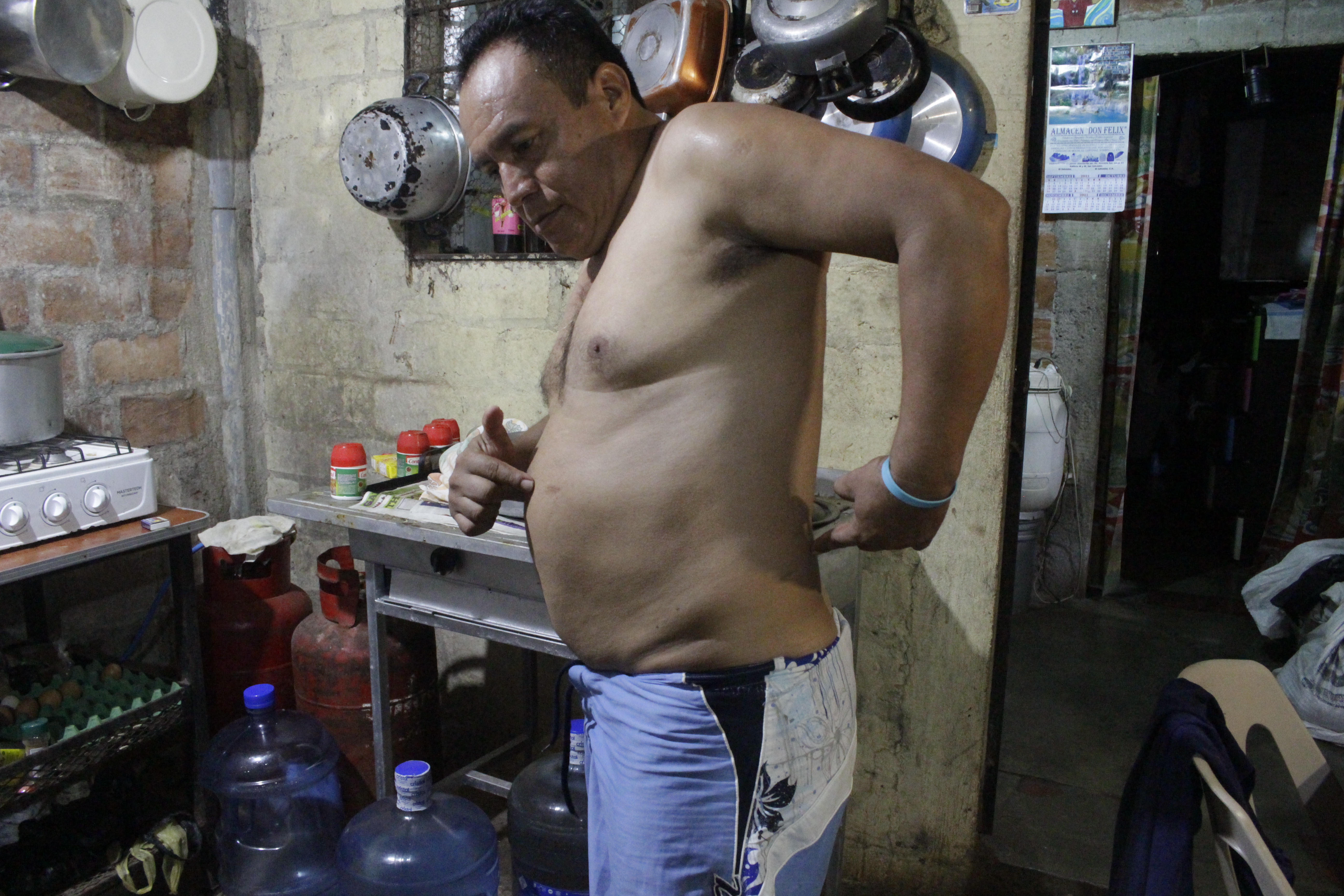
Evangelical victim of gang violence showing where a bullet entered and exited his body.
Photographer: David Torres Ayala

But gangs sometimes provide solutions to the dilemmas poor evangelicals face in everyday life. Maria, for example, asked the local gang leader to get her uncles to stop bothering her. He granted her request. That night Maria gave a testimony at prayer meeting, thanking God for solving the problem she had with her uncles.
Such evangelical/gang entanglements are not unique to El Salvador. They occur in poor
communities around the globe: Haiti, Nigeria, South Africa, Brazil, Kenya, the Philippines, etc. In such places the proximity of churches to gangs provides unique opportunities for
transformational development. It also creates pastoral and congregational needs that faith-
based NGOs may be uniquely qualified to meet. These include counseling for victims of
violence, training for pastors who counsel and disciple ex-gang members, and spaces for church members to think about how to interact with family members in gangs. My new book: Blood Entanglements: Evangelicals and Gangs in El Salvador (Oxford University Press 2023), provides a deeper look at the connections evangelicals have with gangs and recommendations that may be applicable in multiple country contexts.

Back in El Salvador, the government recently implemented a mass incarceration strategy to re- take control of poor communities. Of the over 60,000 people that have been put in prison in the last 12 months, there are numerous pastors and tens of thousands of youths from
evangelical homes. El Salvador’s social and religious context is in a period of rapid change.
New questions and ministry opportunities are thus emerging. How will this further complicate
the evangelical/gang relationship (see photo 2). How can churches be planted in prisons? How can rehabilitation and reinsertion into society occur on a large scale? Perhaps future posts in his conversation will come from people with experiences in such efforts.

Gang member in a rehabilitation center holding a Bible in one hand and flashing a gang sign in the other.
Photographer: David Torres Ayala

Stephen Offutt’s research interests include the intersection of religion and
development, religious transnationalism, and churches and street gangs. He is the
author of numerous books and articles, including the recently released Blood
Entanglements: Evangelicals and Gangs in El Salvador.
El Salvador’s Changing Landscape

barras

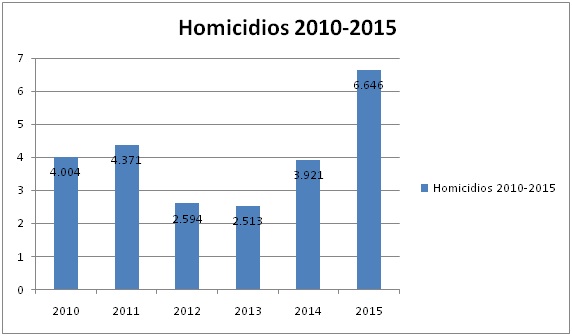
Violence and gang control has spread from San Salvador to almost every province of the country. That was the takeaway from a presentation by Alexander Segovia, director of INCIDE, a Salvadoran think tank created by the director after his tenure working as technical secretary for the Funes administration. Segovia’s talk was based on a recent report put out by INCIDE titled Nuevo Patrón de Violencia. Granted, it´s a fairly easy argument to make when looking at the homicide data. I was more interested in his comment regarding

Three ways communities are responding to the gang violence:

  1. Some communities are responding by “hunkering down” or migrating. In these communities there appears to be insufficient social capital to provide the courage or capacity to resist gang control.
  2. Other communities are organizing to protect their youth from the temptation to join. (I wasn’t clear on all of the details here of how this is done but Segovia was not necessarily speaking about law enforcement here. This kind of organizing includes looking for ways to provide alternative options to youth including local jobs.)
  3. Another set of communities are organizing to arm themselves and fight. This option is most common in communities where the war was the “hottest” and there is a memory of how to organize and arm the citizenry. Among other means of “resisting” gangs, some communities are using social cleansing — the extrajudicial killing of gang members.

Finally, Segovia commented that a relatively new or newly-intensified aspect of Salvadoran society is the pattern of migration — both within Salvador and within Central America, especially to Nicaragua, and especially among youth. When he said this, I immediately thought of one of the young security guards I recently interviewed here in Guatemala. After graduating from high school in El Salvador, he migrated to Guatemala due to the increasing gang activity in his urban neighborhood. “It wasn’t safe enough anymore” he told me. Later I met his cousin, a young woman who had herself just finished her studies and had come to stay with her aunt and uncle in Guatemala, just like her cousin had done a few years earlier. This migration strikes me as a terrible waste of human capital for El Salvador. We are not talking about people who have nothing to offer. We are talking about educated (relatively speaking for the region) young people with hopes and dreams, who are being forced to leave their homeland because of a security situation that has been dealt with in a totally haphazard and “top-down” approach for decades.

On that note, for anyone interested in understanding the actual impact of the Gang Tregua (truce) let me recommend a very interesting thesis I read last week. It’s called Enhancing Citizen Security on the Frontline of a Contested Playing Field by Margriet Zoethout and it provides a view from one of San Salvador’s “Violence-Free Municipalities” over a three-year period during and after the Truce.

One more very interesting point about El Salvador, this one made by Prof. Mauricio Gaborit, Social Psychologist at the Universidad Centroamericana Simeon Cañas. He has been interviewing deported Salvadoran migrants on the day the are forcibly returned to ES. He noted that “The vast majority of Salvadorans who migrate are not jobless or school-less. They have bad jobs or are in weak schools.” Given that the conference was addressing the matter of forced migration, it is interesting to think about the nature of an economy that provides “plenty” of jobs — but way too many of them are really bad ones. Similarly, there are public schools — but most are overcrowded, underfunded, and unsafe. In this context, gang violence and the increasing experiences of insecurity it brings to the community are often a kind of “last straw” as families try to weigh the costs and benefits to sticking it out.

The Truth about San Pedro Sula: Part I

On Monday, PBS ran a story on San Pedro Sula, Honduras called “Gangs ‘Do Whatever They Want’ in Honduran City Known as Most Dangerous Place.” Besides being very low-quality documentary film, the piece has huge, and dangerous errors in it. I am currently conducting research on the gangs in San Pedro, taking the bus, taxis, and my own two feet to get around town. It’s certainly not Oslo here but neither is all hell breaking loose as the documentary tries to claim, and the gangs are surely (and quite demonstrably) NOT behind most of the violence in this country. Thus, I just wrote this paragraph of protest to the executive editor:
 
Dear Executive Producer,
A friend recently sent me the PBS piece called “Gangs ‘Do Whatever They Want’  in City Known as Most Dangerous Place” and I must confess that I was terribly disappointed with the quality of the piece and , frankly, angered by the dangerous inaccuracies it promoted. I am a sociologist who has researched and published on the gangs of Central America (see my book “Homies and Hermanos: God and Gangs in Central America” published by Oxford University Press in 2011), including the gangs of San Pedro Sula, where I am currently conducting new research. While it is true that violence is a serious problem in San Pedro, it is an egregious mistake to report that the youth/street gangs are behind most of this violence. It is absolutely essential that you make a distinction between “drug cartels” and youth gangs. By confusing these two and referring indiscriminately to “drug gangs” and “gangs” the filmmaker created the dangerous misperception that young gang members from marginalized communities “control” the city. This assertion is absolutely false and, while the gang leaders are of course perfectly pleased to be portrayed as such, it puts young boys in the gang or sympathizing with the gang, in grave danger. Nor does it help resolve a complex situation in which drug cartels operate with impunity within vast rural areas of the country. (Another error in the title of the report is the assertion that San Pedro is the most dangerous area of the country. It is not. By simply accessing the publicly available Honduran Violence Observer (compiled by the Honduran National University and funded by the U.N.) one can observe that Atlantida, not Cortes (the area where San Pedro is located) is the province with the highest homicide rate in Honduras. Atlantida, a coastal region with no major city, does not have a major gang presence in it. More evidence that the piece you aired on Tuesday is false and misleading by stating that the gangs are behind most or all of the violence.
I expect MUCH better, more informed journalism from PBS. Please contact me with any responses or questions.