Entanglements between Evangelicals & Gangs

Guest Blog by Stephen Offutt, Asbury Theological Seminary

I conduct research in El Salvador. I began a decade long research initiative in 2013 called the
Religion, Poverty & Development (RPD) project. The first wave of results showed that the most acutely experienced aspect of poverty in lower class Salvadoran communities is violence, and that evangelical churches have a close and complicated relationship with gangs.
I’m delighted to be able to share my findings on Bob’s blog. If you are reading this, you likely
know that Bob’s pathbreaking book, Homies and Hermanos: God and Gangs in Central America (Oxford University Press 2011), explained that gang members are uniquely allowed to leave the gang if they have an authentic conversion to evangelical Christianity – otherwise they are tied to the gang for life. I saw this dynamic at work in my own research; it spoke to the tremendously important role pastors and churches play in impoverished Central American communities.
My book looks at other interactions between evangelicals and gangs. The two groups inhabit
the same marketplaces, schools, buses, parks, and even families, making relationships between them unavoidable. How such relationships function can be surprising. In one example from my research, an evangelical woman (we will call her Maria) had uncles who were in the gang. They got angry with her and threatened her, her children, and her pastor with violence. This is not abnormal: gangs often victimize evangelicals (see photo 1).
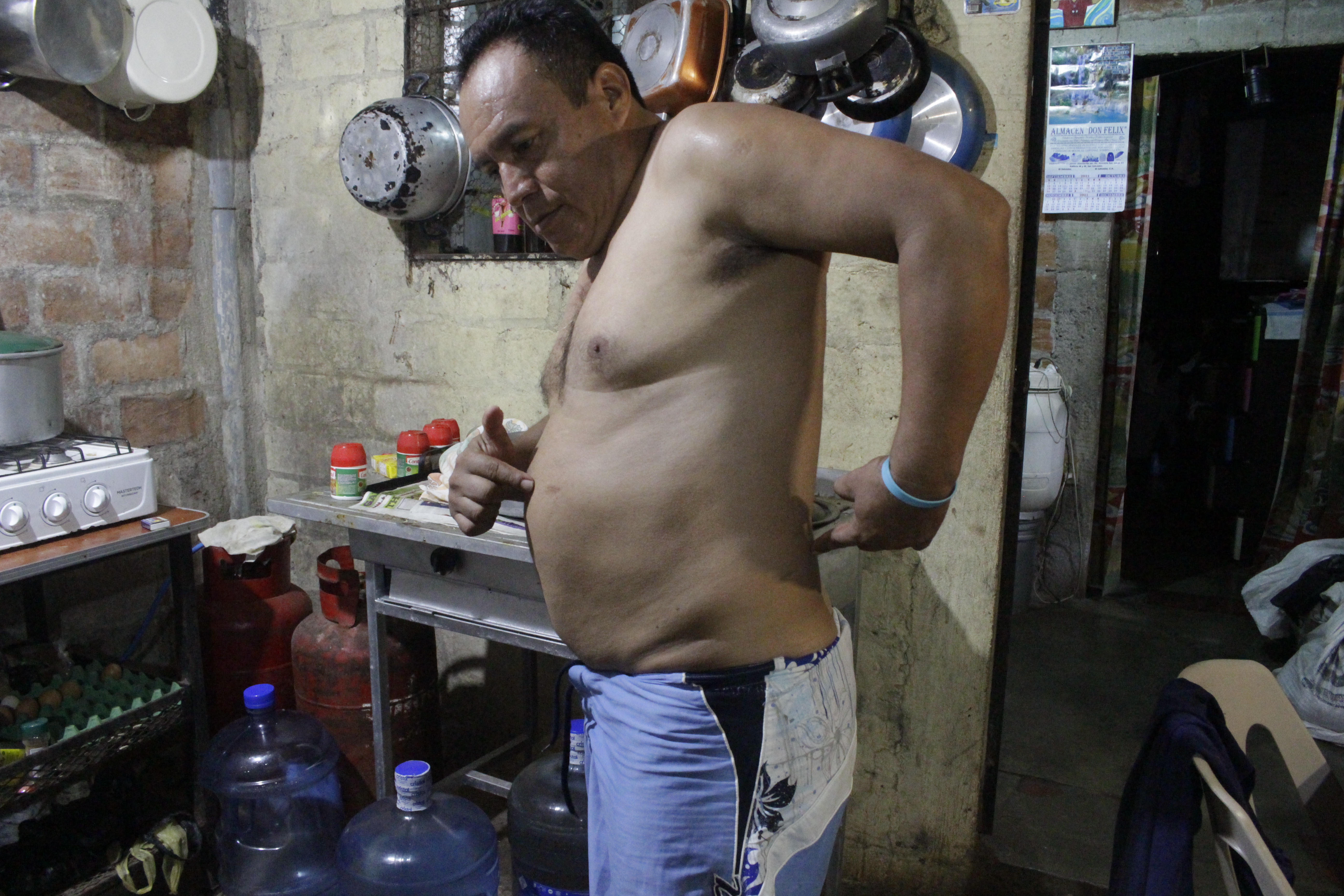
Evangelical victim of gang violence showing where a bullet entered and exited his body.
Photographer: David Torres Ayala

But gangs sometimes provide solutions to the dilemmas poor evangelicals face in everyday life. Maria, for example, asked the local gang leader to get her uncles to stop bothering her. He granted her request. That night Maria gave a testimony at prayer meeting, thanking God for solving the problem she had with her uncles.
Such evangelical/gang entanglements are not unique to El Salvador. They occur in poor
communities around the globe: Haiti, Nigeria, South Africa, Brazil, Kenya, the Philippines, etc. In such places the proximity of churches to gangs provides unique opportunities for
transformational development. It also creates pastoral and congregational needs that faith-
based NGOs may be uniquely qualified to meet. These include counseling for victims of
violence, training for pastors who counsel and disciple ex-gang members, and spaces for church members to think about how to interact with family members in gangs. My new book: Blood Entanglements: Evangelicals and Gangs in El Salvador (Oxford University Press 2023), provides a deeper look at the connections evangelicals have with gangs and recommendations that may be applicable in multiple country contexts.

Back in El Salvador, the government recently implemented a mass incarceration strategy to re- take control of poor communities. Of the over 60,000 people that have been put in prison in the last 12 months, there are numerous pastors and tens of thousands of youths from
evangelical homes. El Salvador’s social and religious context is in a period of rapid change.
New questions and ministry opportunities are thus emerging. How will this further complicate
the evangelical/gang relationship (see photo 2). How can churches be planted in prisons? How can rehabilitation and reinsertion into society occur on a large scale? Perhaps future posts in his conversation will come from people with experiences in such efforts.

Gang member in a rehabilitation center holding a Bible in one hand and flashing a gang sign in the other.
Photographer: David Torres Ayala

Stephen Offutt’s research interests include the intersection of religion and
development, religious transnationalism, and churches and street gangs. He is the
author of numerous books and articles, including the recently released Blood
Entanglements: Evangelicals and Gangs in El Salvador.
Leaving the Gang: Is It Still Possible?

El Salvador Pandillero Pastor Evangelico

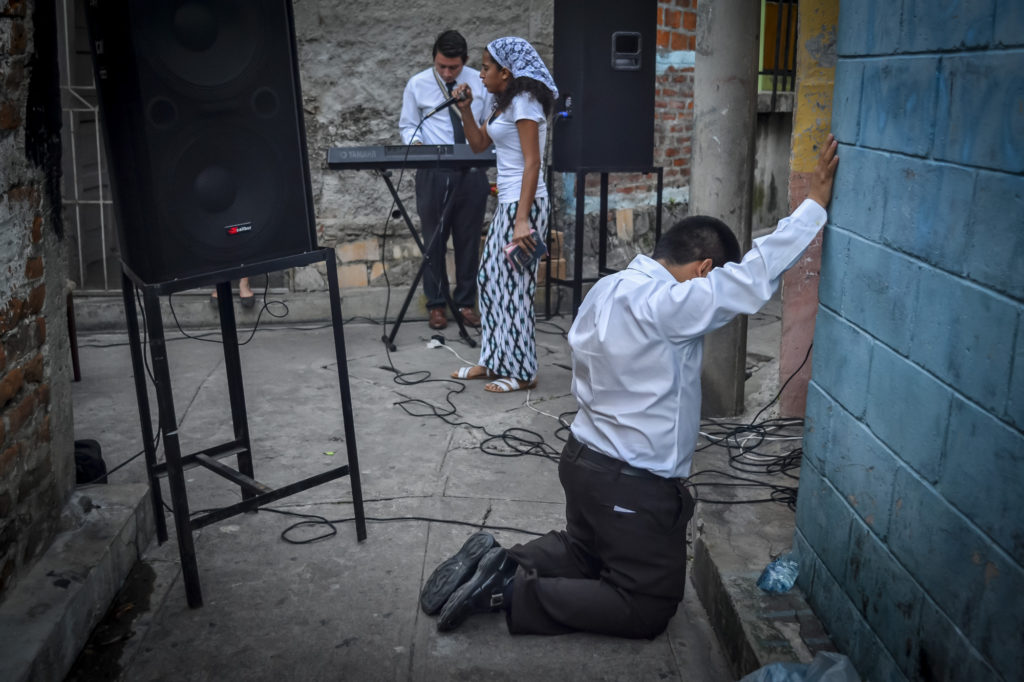
This photo, originally published in D’Aubuisson’s Factum article called “Divine Intervention,” portrays a young female ex-gang member, “Ms. Z”, preaching a fiery sermon against the gang to which she formerly belonged.

Over the last few years, I have tried to ease back on the claims made in my book about leaving the gang by way of the (Evangelical/Pentecostal) church. It’s not that I don’t believe my own research. Rather, given that some of my first interviews with ex-gang members and gang experts are now almost ten years old, I have been less eager to make claims about what the Central American gangs allow. After all, a key characteristic of street gangs is their tendency to adapt to their social surroundings and therefore, gangs, including the Central American gangs, are constantly evolving along with their society. Also, I had been told by several gang researchers that gang leaders, especially those in El Salvador, “no longer let anyone leave.”

I have always been a little bit skittish about the sweeping statements regarding gang policies, especially when those statements make reference to hard-line, supposedly “universal” policies or practices. My research taught me that Central American gangs tend to vary somewhat from one “clica” to the next, even though they do share strong tendencies across the major affiliation groups (MS-13, M-18 “Revolucionarios” and M-18 “Sureños” are the big three in ES). But I had been out of the field long enough that I had started to wonder if my findings regarding religious pathways out of the gang no longer applied in Central America.

Newly published research suggests that my findings — especially the conclusion that many gang leaders allow a “pass” for religious converts if they can show evidence of a changed lifestyle — continue to hold true, including in El Salvador, where gang growth and institutionalization has been the strongest. Two pieces of research that support this conclusion are an extensive report published just this month by Jose Miguel Cruz of Florida International University, and a feature republished in February by Insight Crime. Cruz, who has been studying the Central American gangs consistently longer than any other scholar alive, conducted a large-scale (N=1196) survey of mostly gang members and sympathizers, and came to the conclusion that, not only is it still possible to leave the gang permanently in many clicas, but additionally, “Religious experience plays a key role in the pathway desistance from the gang” (6). He points out that the vast majority of those surveyed reported that the churches are the most capable facilitators of gang rehabilitation (followed by NGO’s).

Meanwhile, Salvadoran sociologist Juan Martinez D’Aubuisson argues, in a very interesting piece called “Divine Intervention” that “Hundreds of gang members are abandoning and outright rejecting their gangs, opting instead for the teachings of evangelical churches.” He also states that some of the ex-gang members, many of whom join churches inside the prison, preach a fiery rejection of the gang.

I am not posting this as “vindication” of my research, conducted in 2007 and 2008. It is, of course, possible, that at some point the gang leaders will end the frequently-held policy of “respecting” religious conversions so long as the convert shows evidence of a changed life. Nor am I stating that the religious pathway out of the gang is the “answer” or “solution” to the problem of gang violence. As my book makes clear, a much more effective, far-reaching approach to reducing gang violence would be to reduce the economic inequalities that fuel alienation among youth, and to expand opportunity and inclusion in marginal barrios through significantly enhanced spending on public schools, parks, and youth recreational opportunities. For the time being, however, local initiatives, both religious and non-religious, can continue to play a key role in providing “off-ramps” from the violent, vida loca lifestyle for a significant minority of gang members who have grown weary of the gang and it’s demands.

Encuentro para la Paz

Foto Final_3

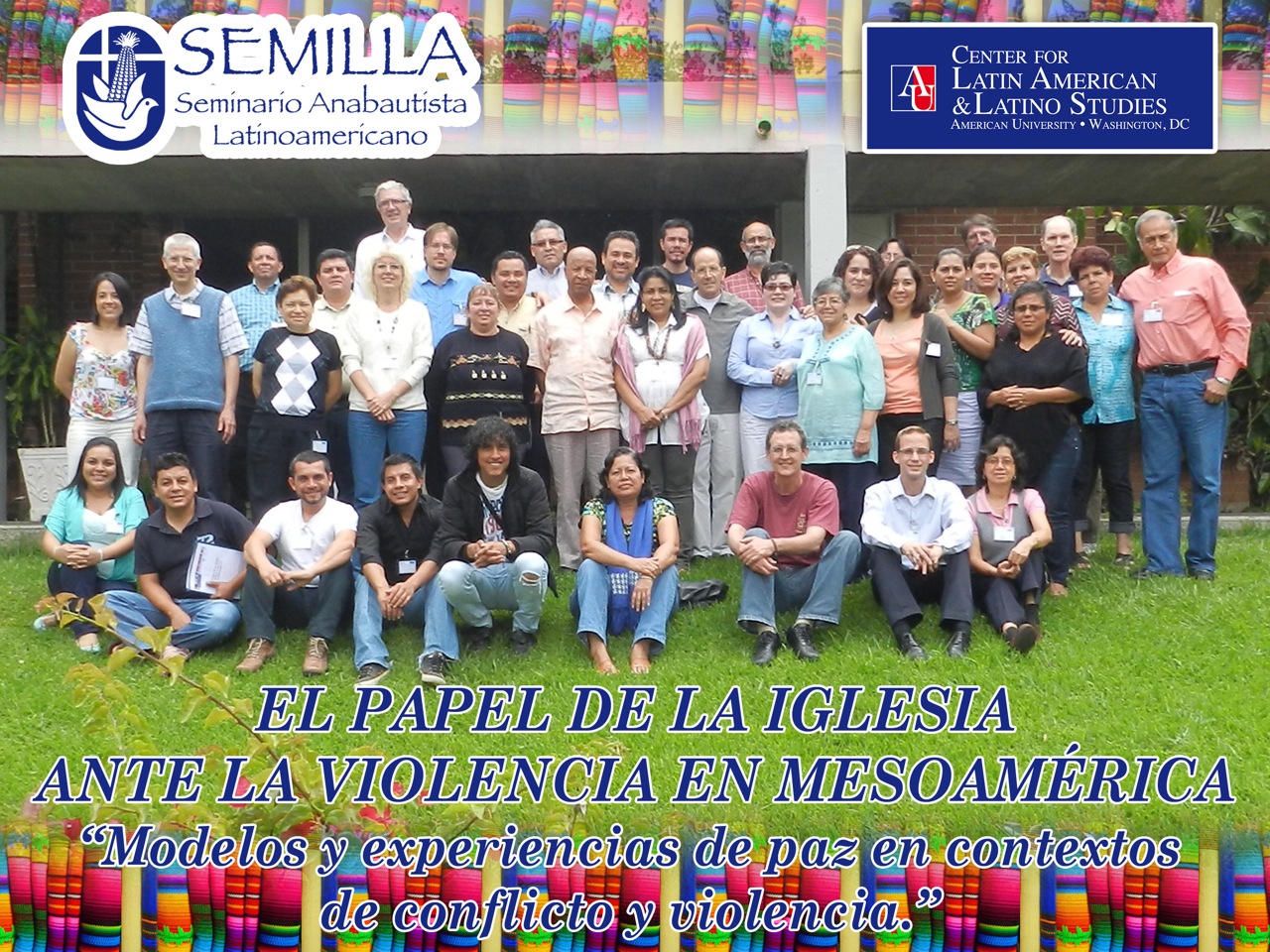
La semana pasada tuve la oportunidad de participar como uno de los organizadores de un enceuntro llamado “El Papel de la Iglesia ante la Violencia en Mesoamérica: Modelos y experiencias de paz en contextos de conflicto y violencia.” Durante tres días se reunieron cuarenta personas de distintos ministerios y proyectos involucrados en enfrentar la violencia en su diversidad de formas en Mesoamérica. Abajo he incluido un par de párrafos sacados de la carta de invitación que mandamos de parte de las dos instituciones organizadoras–el seminario SEMILLA (con sede en Guatemala) y el instituto CLALS de American University (con sede en Washington, D.C.) explicando un poco sobre el contexto y el razonamiento de crear y prepara el evento:

Todos sabemos que nuestros queridos países han sido profundamente afectados por olas consecutivas de violencia de distintos sectores. En los años ochenta, los conflictos tomaron una índole política e ideológica. En los noventa y los 2000, la violencia y la inseguridad no se apagaron, sino que cambiaron de forma, renaciendo en el seno de los barrios pobres con jóvenes marginados y condenados por los demás. Actualmente la violencia juvenil compite con una nueva ola de violencia para controlar el narcotráfico y el mercado oscuro de productos ilegales y de migrantes. Para muchas personas—incluso para muchos miembros de nuestras iglesias y parroquias—la violencia es el problema más preocupante no solo para la nación, sino para sus propias vecindades.


¿Qué hace la iglesia frente a esta situación? En este taller-congreso exploraremos juntos, ¿Qué ha hecho la iglesia? Si bien es cierto que muchas iglesias han ignorado la realidad de la violencia, refugiándose en un espiritualismo alejado de la realidad social, también es cierto que hay otras iglesias y comunidades de fe que, desde su fe cristiana, han hecho aportes decisivos hacia el trabajo de promover la transformación de personas y comunidades afectadas por la violencia.

Honestamente, los organizadores no estábamos tan seguros si el programa — que consistía en darles oportunidad a cada participante a reflexionar sobre los logros, las sorpresas, y las lecciones aprendidos en el camino de trabajar en la construcción de paz — llenaba las expectativas o no de los invitados. Por eso fue muy agradable e inspirador encontrar que entre los participantes, existía mucho concuerdo en que la “nueva” violencia en mesoamerica y la capacidad de las iglesias de nombrar y enfrentarla sí es un tema de gran importancia.

Hubieron muchos momentos de aprendizaje y de inspiración pero quizas tres momentos que sirvieron de mucho fueron

  1. Cuando el Padre Dennis Leder, S.J., dio una reflexión sobre “Una espiritualidad para la paz.” Me dejó muy desafiado con su aclaración sobre las idolatrías de hoy. Dijo que, “Las idolatrías de nuestra época también piden su tributo de sangre.” En otras palabras, la adoración del dinero y el estatus siempre tiene un precio (un precio que se ve en los altos niveles de violencia generada por el avaricio del narcotráfico, la extorsión de vecinos y de migrantes por las maras, y el tráfico de sexo y en la falta de conciencia de todos los ciudadanos que no denuncian estas prácticas).
  2. Cuando los participantes de Mexico compartieron en una “Mesa de Reflexión” sobre la violencia contra los migrantes Centroamericanos en Mexico — tanto los que están en camino como los que se han decidido a quedar. Yo ya había oido sobre los abusos y las violencias que experimentan estas personas al cruzar el pais vecino, pero no estaba enterado de lo profundo y enraizado que están estas practicas y lo enraizado que estan dentro del sistema política de Mexico. Por otro lado fue alentadora saber del gran trabajo de acompañamiento y de concientización que hacen los religiosos y otros líderes de los albergues.
  3. Cuando los participantes crearon una “red” simbólica al pasar una bola de hilado de colores contando cada uno lo que había aprendido en el encuentro y también lo que llevaba. En el encuentro habían personas de iglesias protestantes, Menonitas, Pentecostales, y Católicos Romanos — cosa que no pasa con frecuencia en ésta región de competencia eclesial — y por eso fue impresionante ver a las personas compartir experiencias con transparencia y pasión.

Seguramente otras personas llevaron otras impresiones y desafíos. Hubo mucha oportunidad de ser impactado y desafiado por el trabajo y entrego de diferentes personas desde Mexico hasta Colombia. Pero quizás el punto más importante del evento era el darnos cuenta de lo entretejido que están las violencias en Centroamérica y el reconocimiento de la capacidad de personas de muy diferentes contextos en enfrentarlas con una diversidad de métodos y herramientas. Espero (y confío) en que ésto no será la última reunión de este tipo.